


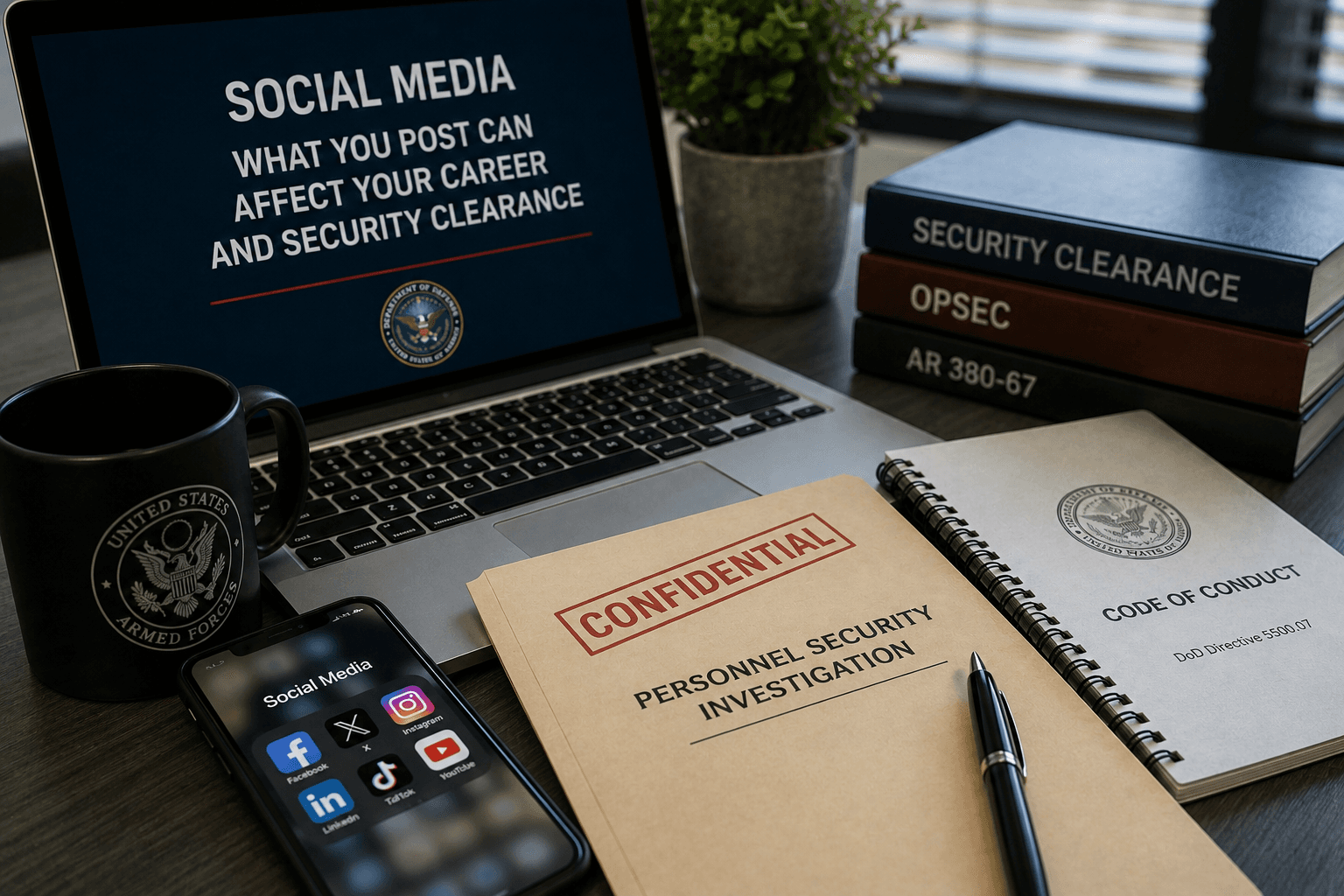
Can Social Media Affect Your Military Career or Security Clearance?

At Military Defender, we increasingly see military investigations and security clearance concerns connected to one unexpected source: social media.
Many service members assume that what they post online is personal and separate from their military career. In reality, online activity can become part of investigations, administrative actions, and security clearance reviews. Even posts made years earlier—or content shared privately—can suddenly become relevant.
In today’s environment, social media is no longer just a personal platform. For military personnel and clearance holders, it can directly affect professional opportunities, reputation, and future eligibility.
Why Social Media Matters in the Military
Military service comes with standards of conduct that often extend beyond the workplace. Because service members represent the military both on and off duty, online behavior can receive significant scrutiny.
Social media may become relevant in situations involving:
- Security clearance investigations
- Allegations of misconduct
- Harassment complaints
- Fraternization concerns
- Operational security (OPSEC) violations
- Conduct unbecoming allegations
What may seem like a casual post can sometimes be interpreted very differently in a military context.
How Online Activity Is Reviewed
Many people are surprised to learn how accessible online activity can become during investigations or clearance reviews.
Information may include:
- Public posts and comments
- Photos and videos
- Messages and group chats
- Tagged content
- Shared articles or opinions
- Dating app activity
- Deleted or archived content recovered during investigations
Even private conversations may become evidence if another person provides screenshots or records.
Social Media and Security Clearance Concerns
For clearance holders, online activity can raise concerns about:
- Judgment
- Reliability
- Trustworthiness
- Foreign influence
- Personal conduct
Investigators and adjudicators may evaluate whether online behavior suggests poor decision-making or security risks.
Examples of potential concerns include:
- Sharing sensitive information
- Reckless or threatening posts
- Dishonesty online
- Unreported foreign contacts initiated through social media
- Evidence of illegal activity or drug use
The issue is often not just the post itself—but what it suggests about judgment and reliability.
Operational Security (OPSEC) Risks
One of the most serious issues involving social media is Operational Security (OPSEC).
Service members may unintentionally reveal:
- Deployment locations
- Unit movements
- Training schedules
- Sensitive operational details
- Base layouts or restricted areas
Even seemingly harmless photos or comments can provide valuable information when combined with other publicly available data.
OPSEC violations are taken seriously and can lead to administrative or disciplinary consequences.
Can Old Posts Become a Problem Later?
Yes. One of the biggest misconceptions is that older content no longer matters.
In reality:
- Past posts may resurface during investigations
- Archived content may still be accessible
- Old behavior may be reexamined during reinvestigation or vetting
This is especially relevant during:
- Security clearance renewals
- Promotions to sensitive positions
- Special duty assignments
Content created years earlier can suddenly become part of a current review.
Social Media During Investigations
If a service member becomes involved in an investigation, social media often becomes a major source of evidence.
Investigators may review:
- Posts related to the allegations
- Conversations with involved individuals
- Photos, videos, or location data
- Public interactions and comments
In some cases, individuals unintentionally damage their position by discussing the investigation online.
Common Social Media Mistakes Service Members Make
At Military Defender, we frequently see avoidable mistakes involving online activity.
Common problems include:
- Posting emotionally during stressful situations
- Discussing investigations publicly
- Sharing inappropriate jokes or comments
- Posting photos involving alcohol, weapons, or misconduct
- Assuming “private” accounts are truly private
- Engaging in arguments or threatening behavior online
Even when no formal violation occurs, these posts can affect perception and professional reputation.
How Social Media Can Affect Promotions and Reputation
Social media issues do not always lead to formal discipline—but they can still impact careers.
Potential consequences include:
- Loss of leadership opportunities
- Negative evaluations
- Reduced trust from command
- Increased scrutiny
- Damage to professional image
In competitive environments, reputation matters. Leadership may consider online behavior when evaluating professionalism and judgment.
Foreign Contacts and Online Communication
For clearance holders, social media can also create foreign influence concerns.
This may include:
- Relationships with foreign nationals
- Frequent communication with overseas contacts
- Financial or personal connections formed online
Failing to properly report required foreign contacts can become a significant issue during clearance reviews.
What You Should Avoid Posting
While every situation is different, service members should be cautious about posting:
- Sensitive military information
- Complaints involving command or investigations
- Content suggesting illegal activity
- Harassing or discriminatory comments
- Reckless or aggressive behavior
- Material that could compromise professionalism
When in doubt, it is often safer not to post.
How to Protect Yourself Online
Good online habits can help protect both your career and your clearance.
Important steps include:
- Reviewing privacy settings regularly
- Avoiding emotionally driven posts
- Thinking carefully before sharing photos or opinions
- Maintaining professionalism online
- Reporting required foreign contacts when necessary
Remember: deleting content later does not always remove the risk.
Why Legal Guidance Can Matter
If social media becomes part of an investigation or clearance issue, the situation can escalate quickly.
An experienced military law or security clearance attorney can help:
- Evaluate the seriousness of the issue
- Prevent harmful mistakes
- Address allegations strategically
- Protect your career and clearance eligibility
Early action is often critical.
How Military Defender Supports Service Members
At Military Defender, we understand that online activity now plays a major role in military and clearance-related cases. Many clients are caught off guard when investigators or command begin reviewing social media activity.
We help clients understand the risks, respond strategically, and protect their future before online issues become career-defining problems.
Protect Your Career Before Online Activity Becomes a Problem
Social media may feel personal—but for service members and clearance holders, it can quickly become professional. What you post today could affect opportunities tomorrow.
If your online activity has become part of an investigation, clearance review, or administrative action, it is important to take the situation seriously.
Contact Military Defender today to discuss your situation and take proactive steps to protect your military career, security clearance, and future.
contact us
Take Command of Your Defense
Fill out the short form below and let our military law experts stand by your side in the fight for justice.