


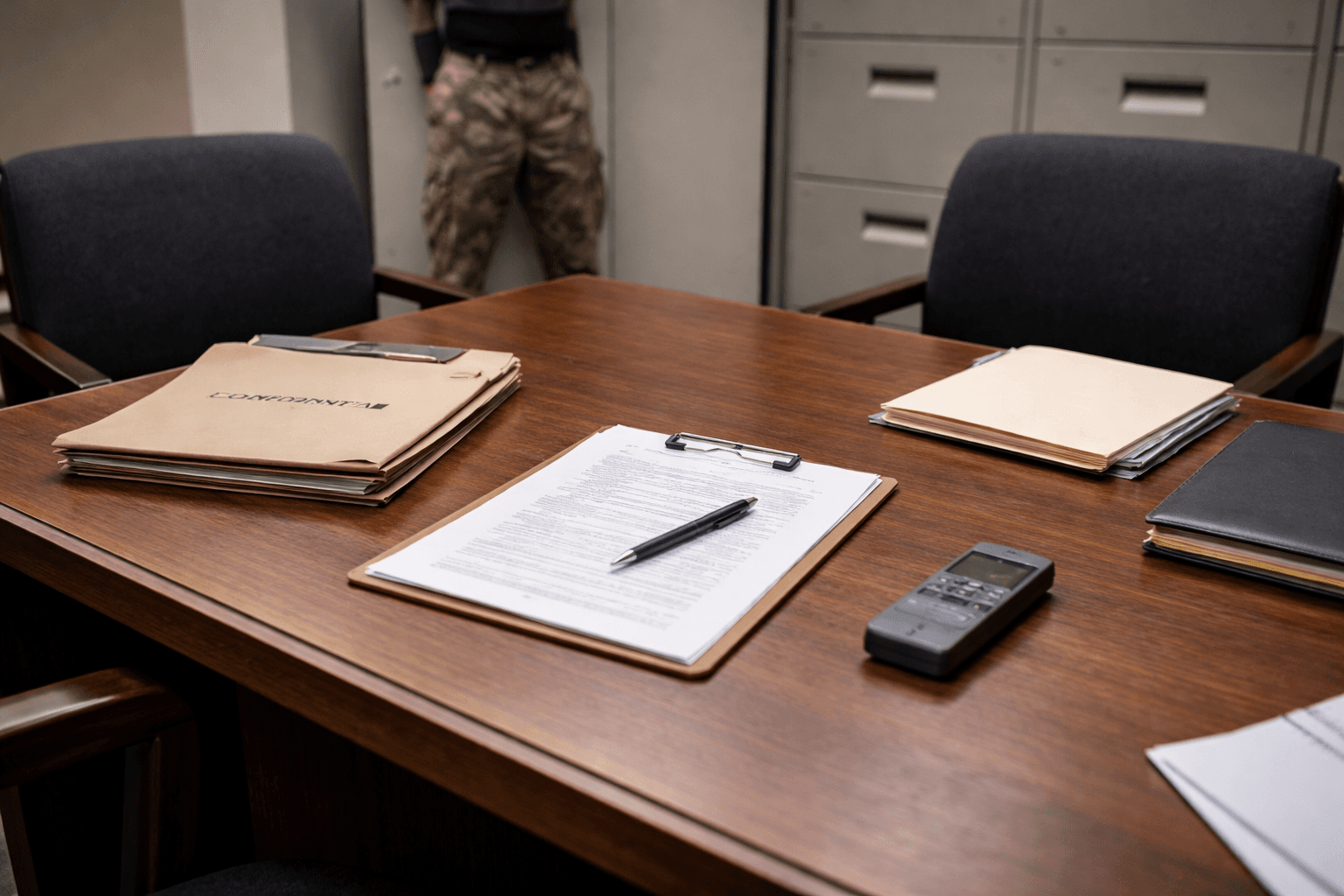
Can You Refuse to Answer Questions in a Military Investigation?

At Military Defender, one of the most critical questions we hear from service members facing investigations is: “Do I have to answer their questions?”
This moment—when a service member is approached by CID, NCIS, OSI, or even command—can define the entire outcome of a case. Many individuals feel pressure to cooperate immediately, believing that staying silent will make them look guilty. In reality, understanding your rights is one of the most powerful ways to protect your career and future.
The truth is simple: you often have the right to refuse to answer questions in a military investigation. But knowing when and how to exercise that right is essential.
What Is Article 31(b) of the UCMJ?
Article 31(b) of the Uniform Code of Military Justice (UCMJ) provides service members with protections similar to Miranda rights in civilian law—but in some ways, even broader.
Under Article 31(b), if you are suspected of an offense, you must be informed of:
- The nature of the accusation
- Your right to remain silent
- The fact that anything you say can be used against you
This applies not only to law enforcement but also to superiors and command representatives when they are questioning you about potential misconduct.
This is a key difference from civilian law.
Can You Legally Refuse to Answer Questions?
Yes. In most situations where Article 31(b) applies, you have the right to:
- Remain silent
- Decline to answer questions
- Request an attorney before speaking
This means you are not required to explain yourself, provide statements, or “clear things up” on the spot.
Exercising this right is not an admission of guilt—it is a legal protection.
Why Service Members Feel Pressure to Talk
Despite having the right to remain silent, many service members still choose to speak. This often happens because of:
- Respect for authority and chain of command
- Fear of appearing uncooperative
- Belief that honesty will resolve the issue quickly
- Informal conversations that feel non-threatening
Investigators may also use conversational tones or suggest that cooperation will help. However, their role is to gather evidence, not to protect your interests.
The Risks of Speaking Without Legal Guidance
One of the biggest mistakes service members make is talking too soon. Even truthful statements can create problems.
Risks include:
- Inconsistent or unclear statements
- Misinterpretation of your words
- Providing information investigators did not previously have
- Filling gaps in the government’s case
- Making admissions without understanding legal implications
Once a statement is made, it becomes part of the record—and cannot be taken back.
When Article 31(b) Applies (and When It Doesn’t)
Article 31(b) protections apply when:
- You are suspected of a UCMJ violation
- You are being questioned by someone acting in an official capacity
- The questioning is likely to elicit incriminating responses
However, there are situations where these protections may not apply, such as:
- Casual conversations with peers (not acting in an official role)
- Statements made voluntarily without questioning
- Conversations with civilians outside official investigations
This is why context matters. Knowing whether Article 31(b) applies can be complex.
What Should You Say When Invoking Your Rights?
If you choose to exercise your rights, you do not need to explain yourself in detail. A simple and respectful statement is sufficient.
For example:
- “I would like to remain silent.”
- “I would like to speak with an attorney before answering any questions.”
You should remain calm, professional, and respectful. Invoking your rights does not need to be confrontational.
Common Mistakes to Avoid
Service members often unintentionally weaken their position during investigations. Avoid these common mistakes:
- Trying to “explain everything” immediately
- Believing informal conversations are off the record
- Answering some questions but not others inconsistently
- Discussing the situation with coworkers
- Posting about the issue on social media
Even small statements can have significant consequences.
Does Staying Silent Make You Look Guilty?
This is one of the biggest concerns service members have. In reality:
Exercising your right to remain silent is not evidence of guilt.
Investigators and legal authorities understand that service members have rights. Choosing to use those rights is a legal decision—not a personal admission.
In fact, staying silent often prevents misunderstandings and protects against unnecessary complications.
What Happens After You Refuse to Answer Questions
If you invoke your rights, investigators may continue their case using other evidence, including:
- Witness statements
- Digital communications
- Physical evidence
- Reports and documentation
Your silence does not stop the investigation—but it prevents you from unintentionally strengthening the case against you.
Why Legal Guidance Is Critical
Deciding whether to speak or remain silent is a strategic decision. Every case is different, and the right approach depends on the specific facts and evidence involved.
An experienced military law attorney can:
- Evaluate the situation before you speak
- Advise you on risks and options
- Prepare you for potential questioning
- Protect your rights throughout the process
Timing matters. The earlier you seek guidance, the more control you have over the situation.
How Military Defender Supports Service Members
At Military Defender, we understand that the first interaction with investigators can shape the entire course of a case. Service members often feel caught off guard and unsure of how to respond.
We help clients understand their rights, make informed decisions, and avoid mistakes that could affect their careers. Our focus is on protecting your position from the very beginning.
Protect Your Rights Before You Speak
If you are being questioned or believe you may be under investigation, do not rush into a conversation without understanding your rights. The decisions you make in the first moments can have lasting consequences.
Contact Military Defender today to discuss your situation and take proactive steps to protect your military career, rights, and future.
contact us
Take Command of Your Defense
Fill out the short form below and let our military law experts stand by your side in the fight for justice.