


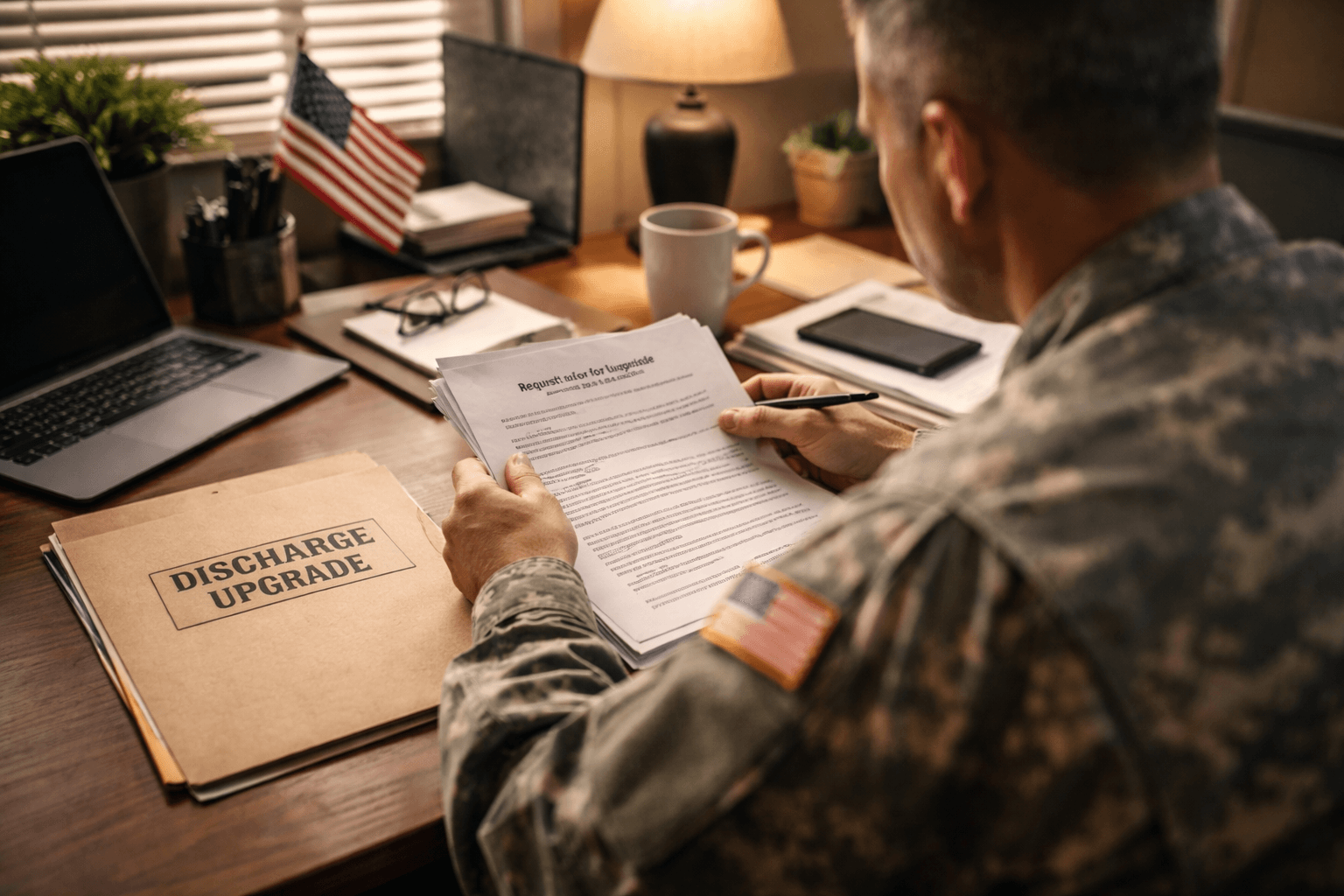
Can You Upgrade Your Military Discharge After Leaving the Service?

At Military Defender, we frequently hear from veterans who are facing long-term consequences due to the type of discharge they received. Many of them ask the same question: “Is it possible to upgrade my discharge?”
The answer is often yes. While not every case qualifies, many former service members are eligible to request a discharge upgrade—especially if there were errors, injustices, or mitigating circumstances involved in their separation.
A discharge upgrade can restore benefits, improve employment opportunities, and remove barriers that may have followed you long after leaving the military. Understanding how the process works is the first step toward rebuilding your future.
What Is a Military Discharge Upgrade?
A discharge upgrade is a formal request to change the characterization of your military discharge to a more favorable status.
Common discharge types include:
- Honorable Discharge
- General (Under Honorable Conditions)
- Other Than Honorable (OTH)
- Bad Conduct Discharge
- Dishonorable Discharge
An upgrade typically involves moving from a less favorable characterization (such as OTH) to a more favorable one (such as General or Honorable).
Why Discharge Status Matters
The type of discharge you receive can affect many aspects of your life after service.
A less-than-honorable discharge may impact:
- Eligibility for VA benefits
- Access to education benefits (GI Bill)
- Employment opportunities
- Security clearance eligibility
- Professional reputation
For many veterans, upgrading their discharge is not just about benefits—it’s about restoring dignity and opportunities.
Who Can Apply for a Discharge Upgrade?
Most former service members can apply for a discharge upgrade, but eligibility depends on several factors.
You may qualify if:
- Your discharge was not the result of a general court-martial
- There were mitigating circumstances at the time of discharge
- There was an error or injustice in the process
- New evidence is available
- You have demonstrated post-service rehabilitation
Each case is evaluated individually, and outcomes depend on the strength of the evidence presented.
Where Do You Apply for an Upgrade?
There are two main boards that handle discharge upgrade requests:
Discharge Review Board (DRB)
- Reviews discharges within 15 years of separation
- Can upgrade discharge characterization
- Does not change the reason for discharge in most cases
Board for Correction of Military Records (BCMR)
- Handles cases beyond 15 years
- Can correct errors or injustices
- Has broader authority than DRB
Choosing the correct board is an important part of the process.
What Do You Need to Prove?
To successfully upgrade your discharge, you typically need to show either:
- Error (something was done incorrectly), or
- Injustice (the outcome was unfair under the circumstances)
Examples of supporting arguments include:
- Procedural mistakes during separation
- Disproportionate punishment
- Mental health conditions (such as PTSD or TBI)
- Personal hardships at the time of service
- Lack of proper representation
Strong documentation is key to building a persuasive case.
The Importance of Supporting Evidence
Your application should include evidence that supports your request. This may include:
- Service records
- Medical or mental health records
- Character reference letters
- Employment history
- Evidence of rehabilitation or good conduct
- Personal statements explaining your situation
The more complete and organized your submission is, the stronger your case will be.
Common Mistakes in Discharge Upgrade Applications
Many veterans submit applications that are incomplete or lack strategic focus. Common mistakes include:
- Providing little or no supporting evidence
- Submitting vague or emotional statements without facts
- Failing to explain the circumstances of discharge
- Missing deadlines or procedural requirements
- Not addressing the legal standard of “error or injustice”
A weak application may be denied even if the case has merit.
How Long Does the Process Take?
Discharge upgrade cases are not resolved quickly. The timeline can vary depending on the board and complexity of the case.
In general:
- DRB cases may take several months
- BCMR cases can take a year or more
While the process can be lengthy, a successful outcome can have long-term benefits.
How Legal Guidance Can Improve Your Chances
A discharge upgrade is not just paperwork—it is a legal argument. Presenting your case effectively requires strategy, evidence, and understanding of military regulations.
An experienced attorney can help:
- Identify the strongest legal arguments
- Organize supporting evidence
- Draft a compelling personal statement
- Avoid common procedural errors
- Increase the likelihood of a favorable outcome
Professional guidance can make a significant difference.
How Military Defender Helps Veterans Move Forward
At Military Defender, we understand that your discharge does not define your entire service or your future. Many veterans were separated under difficult circumstances that deserve to be reconsidered.
We work closely with clients to build strong, strategic applications aimed at correcting records and restoring opportunities.
Take the First Step Toward Restoring Your Record
If you are living with the consequences of a less-than-honorable discharge, you may have options. Taking action now can open doors that once seemed closed.
Contact Military Defender today to discuss your case and take the first step toward upgrading your discharge and protecting your future.
contact us
Take Command of Your Defense
Fill out the short form below and let our military law experts stand by your side in the fight for justice.